

MONMOUTHSHIRE will go to the polls on 12th Decemebr after a General Election was called by Prime Minister Boris Johnson.
Ahead of the election, the Beacon asked all Monmouth candidates a set of questions.
Who are you?
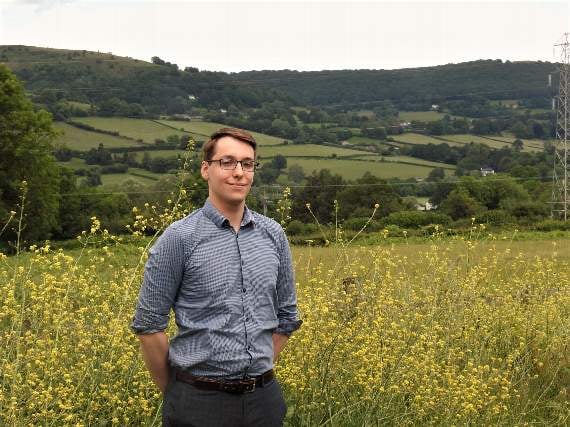
I am Hugh Kocan, I am 22 and I am born and raised in Abergavenny. I have studied at both Swansea and Cardiff University, focusing on economics and the economy of Wales.


Why should people vote for you on 12th December?
Because Wales has been let down badly by the Westminster establishment. Labour do not care about Wales, as demonstrated by their promise of £3.4bn investment in Wales, compared with their promise of £100bn for Scotland. While the Conservatives have ignored calls from the Welsh Government for a softer form of Brexit, and cancelled vital investment such as the Swansea Bay tidal lagoon. It can not be right, that in the fifth richest country in the world, Wales stands out as one of the poorest regions in Europe. Labour, The Conservatives and the Liberal Democrats only care about their party, and Wales suffers because of their neglect
If elected what would be your first priority?
It will be to ensure Wales receives its fair share of funding from Westminster. I would demand that Wales receives an extra £5bn in capital investment, which would be directly invested in our communities. I would also ensure that the way in which the Welsh Government is funded is changed to reflect our population’s unique circumstances.
This will be to ensure that our economy is able to grow, and so that we can work to become more self-reliant.
We also need to ensure that Wales is not overlooked by Westminster, as it has been done so often before. The electrification of our railways, and the Swansea bay lagoon need to be implemented. We need to ensure that we develop on our solar, wind, and hydroelectric power stations, so that we can become a world leader in green energy.
What should we be doing to deal with climate change?
Climate change is such a wide-ranging issue, and there are so many things that people can be doing to help. Using public transport, cutting down on single use plastics, and buying from environmentally sustainable companies are all examples of little things that can be done.
However, it is not the average person who contributes the majority of emissions or contributes to environmental damage. A report from the UN in 2010 showed that the top 3000 companies in the world have caused £3 trillion in environmental damage.
As such, the most impactful thing we can do is to lobby for our governments to hold these companies to account. Introducing carbon taxes, charging them for damages, and banning imports of goods that are linked to environmental damage is something we all should strive to.
How do you think Brexit will affect the day-to-day lives of people in the constituency?
Leaving the EU poses so many risks to our local communities. From staffing shortages for the NHS, to access to European markets, numerous workers rights, animal welfare legislation, environmental protection, the Welsh Regional office in Brussels, and millions in capital investment. We risk losing all of this, for such little gain, if we lose the EU.
The promises that were made by Brexiteers during the referendum were overly optimistic at best, bare faced lies at worst. It is clear now the damage that would be caused by an ideologically driven hard Brexit. That is why we need a final say referendum, to ensure that the people can have their say on what the future of our country is.
What do you think is the biggest challenge facing the next MP for Monmouth?
The current political environment has eroded the public’s trust in politicians. I see the biggest challenge for the next MP of Monmouth as regaining this trust. Without this trust, any MP cannot say that they represent their constituents’ best wishes.
If elected, I would hold citizens assemblies on all issues, that would directly impact my decision making in parliament, so that the link between people and power is restored. I would also campaign to reform our voting system, so that people can vote for who they truly want, rather than tactically voting.
There does also need to be a heavy focus on social care in Monmouth. The closure of the dementia ward in Chepstow highlights the issues many face in accessing adequate social care. With a rapidly aging population, this problem is going to accelerate in the coming years. As such, the next MP must seek to gain extra funding, and look to fully cover social care.
Comments
This article has no comments yet. Be the first to leave a comment.