

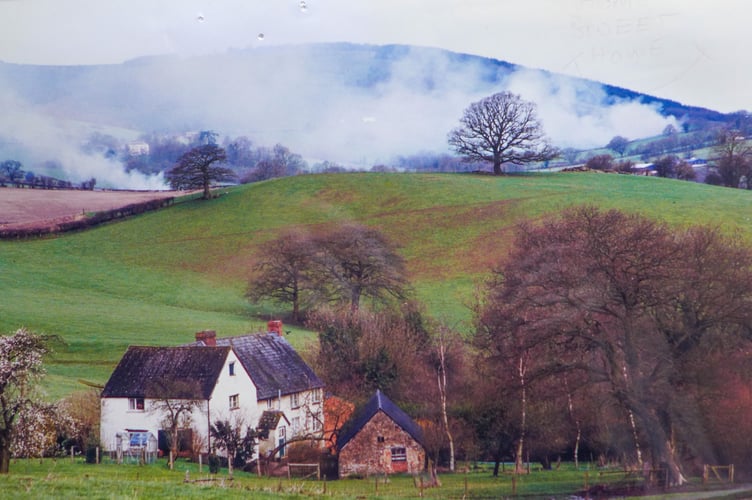
On the 25th anniversary of the foot-and-mouth disease (FMD), many Monmouthshire farmers look back and remember those dark times when thousands of animals were slaughtered and burned on their farms and on those of their neighbours.
The 2001 outbreak originated from pigs at a Northumberland farm fed illegally imported, contaminated meat swill. It spread rapidly due to undetected infections, sheep movements through markets (notably Longtown in Cumbria), and airborne transmission.
The crisis lasted 221 days, resulting in over 6 million animals culled.
When the disease was confirmed in Britain in February 2001, it spread rapidly through animal movements before national controls by the Ministry of Agriculture, Fisheries and Food (MAFF, forerunner to DEFRA) were fully in place.


The disease spread across the country, and to Monmouthshire in particular through the movement of animals by unsuspecting traders buying and transporting animals to markets elsewhere.
Farmers' worst fears were realised on March 1 with two confirmed cases of foot and mouth disease at Llancloudy and Llangarron.
The first outbreak was at Hill Farm, Llancloudy, run by Kevin Feakins. It is understood that sheep on the farm had been traced to Burdon Farm, Highampton, Devon, where one of the outbreaks occurred. Hill Farm is between St Weonards and Monmouth.
All the farm's livestock - 270 cattle and 600 sheep - were slaughtered and a further 500 sheep on tack in a field adjacent to the outbreak and belonging to another farmer, Steve Watkins, were also killed.
A ten-kilometre exclusion zone was placed around the farm.
But by then, it was too late.
As the outbreak intensified, strict biosecurity measures were imposed. Livestock movements were banned, public footpaths across farmland were closed, and farms suspected of infection were quarantined. In Monmouthshire, several farms were confirmed as infected, while many others were designated as “dangerous contacts.” This led to the widespread culling of animals, even on farms where no disease had been detected. Thousands of cattle and sheep were slaughtered in the county as part of the national disease-control strategy. For farmers, the loss was not only financial but deeply emotional, as entire herds built up over generations were destroyed.
Foot and Mouth was detected on a neighbouring farm to Ted and Mike Westoby near Skenfrith, so their animals were taken out to make a firebreak: 2,000 of his animals were culled.
He told ITV’s Hannah Thomas in 2021: “Going out in the morning, instead of looking around your stock, all you had was a deathly silence.
“All the hard work we had put in, to see your animals slaughtered was just devastating.”
He had not recovered to the numbers he had back then twenty years later.
That area became known locally as death valley as all the animals in a four-mile radius were culled.
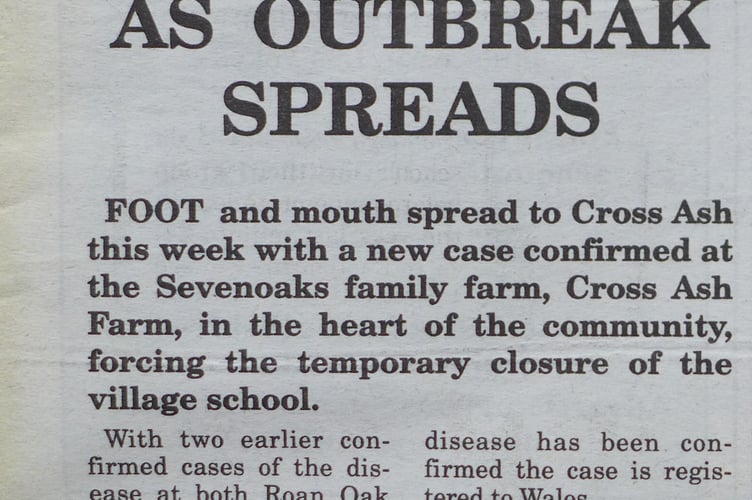
From Turners at Graig Farm, to Williams at Trebella, Davies at Lletravane, Edwards at Brook House, Sevenoaks at Cross Ash and Barn Farm and Bowen’s at New House Farm.
Peter Williams who farmed at Trebella and Wernllwydd told the Beacon this week: “The animals are all back but the memories of the actual cull still haunts me. It was the gradual silence of the sheds of animals as they progressed with the cull that sticks in the mind. Also the beginning of the end of the local markets as it was never the same again.
“I honestly think as bad as it was for those culled it was also horrendous for those with animals left with all the movement restrictions put upon them.”
The clean-up operation began with the army killing the cattle, calves, sheep and lambs on the farm, and then loading the carcasses into 20 ton bulkers and transported to the Epynt mountain near Sennybridge, nine miles west of Brecon.
But, whether it was down to local protest or the notion that carrying carcasses of dead animals which may have been infected across the country was a bad idea, they then began killing and burning on the farms themselves.
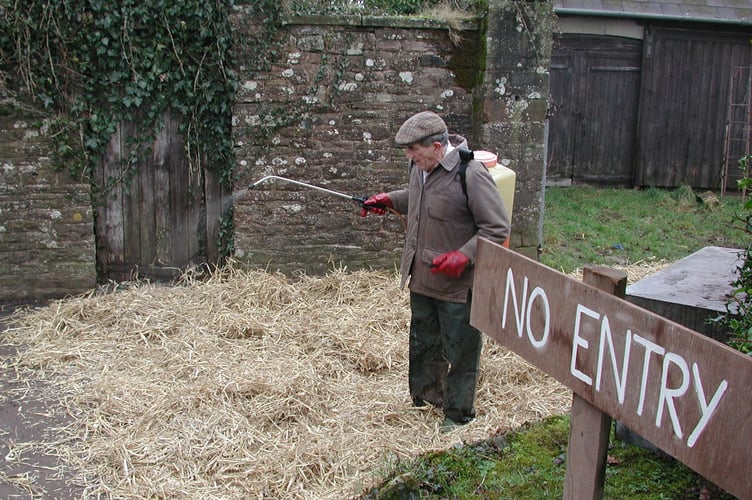
Markets were closed, farmers shut their farms off to the outside world and prohibited any vehicles entering the premises.
Access to the countryside was restricted, public footpaths and many tourist attractions closed, and the number of visitors to rural areas plummeted.
The Royal Welsh Show that year was cancelled and the 2001 Six Nations rugby tournament disrupted, with Ireland's games against Wales, England and Scotland postponed until the autumn.
The outbreak was declared over in January 2002.
Comments
This article has no comments yet. Be the first to leave a comment.