
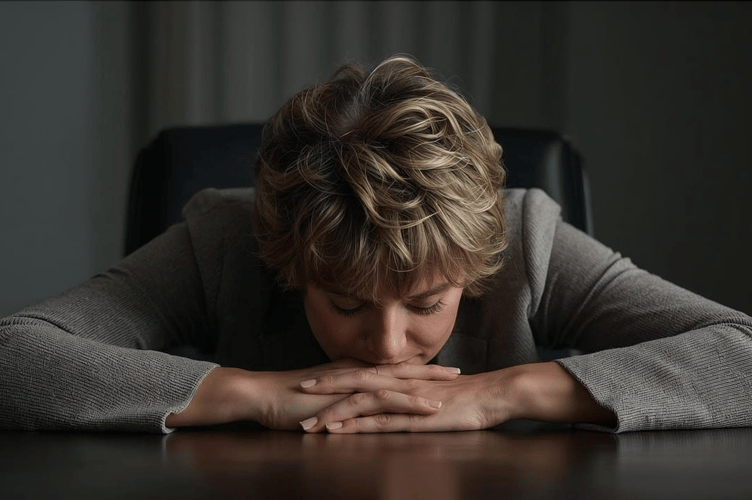
As the NHS launches its new online service, it has revealed it expects to see 8.5 million patients virtually, with symptoms of the menopausal - along with nine other conditions - the first to be treated by the new online service.
Despite this, many people feel there just isn’t enough support for women who are going through the menopause, so could this new system be one step in the right direction?
What actually is the Menopause?
The Menopause is a natural biological stage in a women’s life when their menstrual cycle comes to an end due to lower hormone levels of estrogen and progesterone.


.png?width=209&height=140&crop=209:145,smart&quality=75)
Women tend to go through the menopause between the ages of 45 to 55 but this can differ. Before they go through the menopause, they will experience peri-menopause where they may experience symptoms but still have periods which can become irregular. It isn’t until they have no periods for 12 months that the menopause officially starts.
“
Be proud of how you show up everyday, feeling comfortable in your own skin, being your magnificent you.
-Unknown
What are the most common symptoms of the menopause?
According to the NHS, symptoms of the menopause include anxiety, mood swings, brain fog, hot flushes, and irregular periods.
However, there are different symptoms and not every woman will experience the same, which is why it’s important to not compare or feel like you're going through something alone. Symptoms can be influenced by genetics, environment, and overall health.
The launch of the new NHS online system, which includes offering more support virtually for women who are going through the menopause, follows an initial announcement by the Prime Minister in September 2025 unveiling the new NHS Online Hospital which he said would transform how healthcare is delivered.
The online system means patients can be dealt with quickly via the NHS app and have an online, virtual appointment and be seen more quickly which it is hoped will also reduce overall waiting times. Patients will be able to stay relaxed in their own home and speak in a comfortable setting.
The conditions which are initially being prioritised by the service are:
- Glaucoma
- Conditions affecting the retina at the back of the eye
- Cataracts
- Inflammatory bowel disease
- Iron deficiency anaemia
- Prostate Enlargement
- Raised PSA levels
- Menopause
- Menstrual problems
Patients will still be able to have in-person appointments if that is what is more comfortable for them with the online service providing an alternative option.
Waiting times have been a huge issue for NHS for many years, but there is considerable optimist this new service will mean that more in person appointments will become available and free up further space for patients.
Despite the menopause being an experience all women go through, it’s only relatively recently that people are becoming more aware of it, with many women saying they have felt alone and unsupported because of the lack of awareness and knowledge around it.
“
The greatest wealth is health, and menopause is a reminder to invest in yourself.
-Valeria Bertinelli
How can we support women going through this change?
When people don’t understand what the menopause is and what can happen, it can have far reaching implications on their lives from work and hobbies to relationships. So what can be done to help?
One of the most important ways people can help is by listening to the person to try and understand what they are going through. As menopause is a new and unfamiliar experience for most, they may feel alienated and having a support system around can be hugely beneficial in easing the route through this journey.
It is important to encourage women during this time as they might not feel like themselves and having words of encouragement can help them feel uplifted, supported and empowered.
If you are experiencing menopause symptoms, there are things you can do to help alleviate some of them - an active, healthy lifestyle has been showed to help, so try to take regular walks, go for a walk, a swim, or a yoga class and generally try to become more active.
Reducing alcohol and smoking intake can also reduce symptoms of the menopause, so maybe stay in and cook a meal rather than going out to a pub or restaurant which heightens the likelihood of being around alcohol or people who smoke.
“
Menopause is a journey where you rediscover yourself and become the woman you were always meant to be.
-Dr. Christiane Narthrup
For many women menopause can be an unsettling time of life as there’s no ‘one size fits all’ pattern to the experience. Many women feel that it has been seen as a ‘taboo’ subject and have been almost ‘embarrassed’ to talk about what they were going through but with the NHS new online system this could be a changing picture.
Many women turn to support from their GPs and many opt for Hormone Replacement Therapy (HRT) - replacing estrogen and progesterone - which can come in various forms.
Is there enough support for women going through the menopause?
The level of support for women going through the perimenopause and menopause has long been questioned, so we asked Monmouth residents if they have found it easy to get the help they need, along with information about this hormonal transition.
Of the 53 we spoke to, 23 people found it’s getting better, 23 people said no and seven people said yes.
We also spoke to a menopause expert - a specially trained prescribing pharmacist at H.Shackleton Pharmacy in Abergavenny who also agrees there should be more awareness surrounding the menopause.
“I think women’s health is an area which is underfunded and really not talked about enough. It is getting much better, but there’s still lots of things we can do, especially in the community, said Abbie Roberts.
“We do need to do more to try and understand women’s health more in general but also making it accessible for women so they can get that help and advice.”
“We’re really lucky now in the community that we now offer more contraceptive services in the pharmacy. We don’t offer HRT as such or menopause treatment, but we’re very knowledgeable about the condition.
“We need to be working closely with the GP’s so we can refer women in for these treatments and if that’s something they wanted to talk about.”
“There’s such a huge range of symptoms that can affect your body in so many different ways and every woman is different, and that's how women can feel alone.
“Women are questioning if they’re ‘normal’ because they might be going through different experiences to their friends and family.
“Most of the GP practices have a menopause champion, so they have a specific GP in each practice who’s been on extra training days and goes to workshops who specialise in the menopause.
“We shouldn’t feel alone because we’re all going to go through it and the majority of females in the country are going to go through the menopause, and at times it’s one of the things which is certain.
“Families can offer their time and support to those going through this, and they can do this by understanding and reducing the stigma around talking about it.
“Some women feel really embarrassed because a lot of the symptoms are hormone based, and then for the younger women they can feel there’s a stigma around it but there doesn’t need to be.
Am I losing ‘my spark’?
Being swept up in so many hormonal changes can also mean potentially losing yourself in the process. Women have felt that going through these physical and psychological changes can change how they perceive even the simplest of tasks. Their confidence can drop, self-esteem lowers and sometimes they might feel they are questioning their purpose, feeling like they have hit a wall.
Going through this experience can shift people’s mindset, leaving them feeling vulnerable and negative. There has been an increase in suicide rates in women aged between 45 to 54 (perimenopausal and menopausal age) which have risen six per cent in 20 years, according to the Office of National Statistics.
Davina Mccall Television Presenter has written an entire book dedicated to her personal menopausal experience. She touched on how she felt ‘embarrassed’ to confide in her friends that she was on HRT. She felt ashamed that she had to rely on replacement hormones after fighting difficult challenges in her life, including home births without medication - something many women felt they could relate to and which has shone a light on how impact of menopause.
A ‘hormonal firework display?’
Now the Menopause is more to the forefront than ever, questions are being asked about women being supported going through these changes in the workplace.
Haberdashers’ Monmouth School, school nurse, Louise Goodwin has commented on behalf of the school from a medical point of view and explains how they support women going through these changes in school.
“As an independent school we have school nurses employed by the school. Staff can come to us as well as the pupils for medical reasons and mental health and wellbeing.
The menopause does come up; we have got a big female body of staff. Usually, the staff are very open and because we’re registered nurses; we have a code of conduct of confidentiality.
“I think it is easy to underestimate the menopause when it is a major issue. It's like a hormonal firework display.
“
Menopause is not an age; it’s a stage. A stage of wisdom and freedom.
-Unknown
What support is available in the workplace?
“Colleagues all have our support, and we can access advice for them, we also have a counselling service. We have three counsellors at school, and they see members of staff as well.
“We have launched an app called ‘Help at Hand’ for all school staff where they access a remote GP, physiotherapy, lifestyle coaching, mental health support, 24/7 help support for emotional, logistical support which would cover menopausal issues.
“Our school has an alliance with Castle Gate Medical Practice in Monmouth, and they have done sessions around topics, and they have done one on the menopause.
“I think generally we are quite an empathetic workplace.
“It has to be taken seriously to protect lives.”
This support might not apply to all workplaces, but many other employers have installed flexible working hours, cooler working spaces, and more breaks for women. With one of the main symptoms being brain fog some have allowed apps which might help with reminders and allow people to stay informed with what they need to do.
The urge to understand what is happening is all a part of the process because in reality no two experiences are going to be exactly the same. One person’s experience might not be the same as someone else's, but that doesn’t mean you’re alone.
If you are feeling like you need some support or access to further information about the menopause, here are some helpful websites you can visit:
Comments
We've recently changed our login process. If you have an account for commenting, you will need to re-register on the login window.
This article has no comments yet. Be the first to leave a comment.