
SIR,
David Hancocks, in his letter to you last week, refers to the Radio 4 programme in which both of us partook along with Professor Howell Wyn Owen and others.
Professor Owen said that care was required in translations and cited Bedford as an amusing example.
He was not aware that we have a comparable example here at Monmouth where Rushey Meadow had the road sign Dol Rushey.


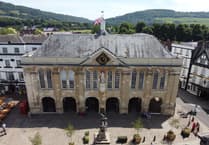

Following my intervention with the county council, we now have a new sign showing the correct translation as Dôl Frwynog.
In 2007 Professor Owen, who had been director of the Place-name Research Centre at Bangor University and then president of the Society for Name Studies in Britain and Ireland, jointly published the directory of place-names in Wales with Richard Morgan, who is county archivist with Glamorgan Record Office and an honorary lecturer at the School of Welsh at Bangor University.
This work, from which I derive much pleasure and guidance, has been described by Emeritus Professor Gwynedd Pierce as 'A milestone in the history of Welsh place-name studies'. This is a most apt description.
In the case of Rockfield, there is no mention whatsoever of a Welsh translation. Neither do they mention a Welsh translation for Cross Ash.
The Welsh Language Board do not have Welsh names for these two settlements. They recommend using the English only 'Rockfield' and 'Cross Ash'.
It is apposite for me to point out that Rockfield Church is dedicated to the 5th Century St Cenedlon, who was the son of Brychan, after whom Brecknockshire was named. Its founding is said to be in the 5th or 6th Century when most churches in these parts were founded.
Incidentally, in 'Kelly's Directory of Monmouthshire and South Wales', 1895, it was stated that in "olden times" the village was called Corn-y-Cenhedloedd.
Personally and as a Welsh speaker, I would follow the advice of the Welsh Language Board that when there are only one or two differences in the spelling, we should opt for the Welsh.
I cited Porthmadog, Caernarfon and Conwy in the programme.
Why not take this approach in Monmouthshire to places such as Llanellen, Llanofer and Rhaglan for a start?
Our community council strongly refutes any leanings towards 'political correctness'. There are rules and regulations which we must respect.
We have found the advice of the Welsh Language Board most helpful and based on common sense at all times.
All we ask of our county council is that they consult with us in accordance with legislation and their own published four 'values' and then ensure that both the Welsh and English place names on the directional signs are correctly spelt.
Lastly, should Mr Hancocks research Ynysgynwraidd, he will discover why we favour its retention.
Roy G Nicholas
(Trefynwy)