

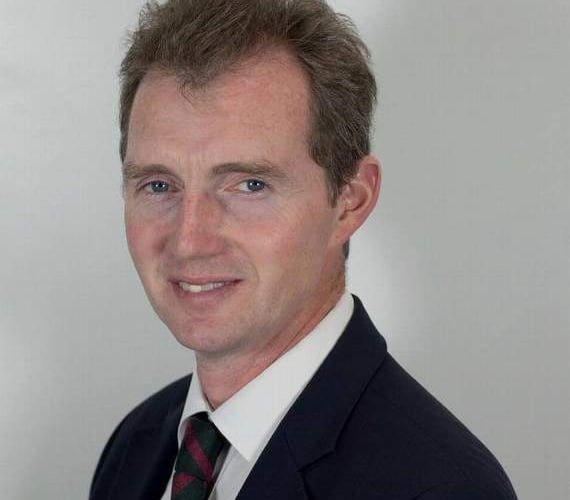
MONMOUTHSHIRE will go to the polls on 12th Decemebr after a General Election was called by Prime Minister Boris Johnson.
Ahead of the election, the Beacon asked all Monmouth candidates a set of questions.
Who are you?
I am David Davies, the Conservative Parliamentary Candidate for Monmouth. I live in Monmouth with my wife Aliz and three children, who are all pupils at Monmouth Comprehensive School. Originally from Newport, I worked in the haulage industry before being elected as the Assembly Member and then Member of Parliament for Monmouth. I also served in the Territorial Army at Raglan Barracks Newport and for nine years as a Special Constable with the British Transport Police.


Why should people vote for you on 12th December?
I believe an MP is first and foremost there to serve the community. Over the last 20 years I have taken up thousands of cases for individuals with problems, anything ranging from hospital waiting lists to slow broadband. I have held regular advice surgeries across the constituency and would continue to do so if re-elected.
If elected, what would be your first priority?
My first priority would be to bring the debates about Brexit to an end so we can unleash the potential of our whole country and move forward instead of going backwards. We must continue with the careful management of the economy. In 2010, the country was nearly bankrupt and we were borrowing over £100bn a year. Borrowing has been brought under control, unemployment has fallen to the lowest level for 40 years and growth in the economy allows us to increase spending on education, the police and especially the NHS. As a Conservative, I will ALWAYS support the NHS. Labour’s plans to nationalise industries and put up taxes on business would put the economy at risk and make investors far less likely to come to the UK. We must also ensure a fairer immigration policy. The population is growing by around 300,000 people a year. We should always welcome those who come legally to the UK with skills to offer but we must also be able to control the numbers. Labour’s plans to end immigration controls would be disastrous for the NHS and fuel the housing shortage.
What should we be doing to deal with climate change?
Under a Conservative government, Britain will reach Net Zero by 2050 with investment in clean energy solutions and green infrastructure to reduce carbon emissions and pollution. The UK only emits one per cent of man-made carbon emissions worldwide so unless the rest of the world follows our example, our actions will have no action on the climate. A 30-year transition allows us to implement change without cuts in living standards or job losses. As a keen outdoors person, I also appreciate the importance of tackling plastic pollution. Like many local people, I have occasionally ventured into the River Wye for a bit of wild swimming and will support measures to make sure our rivers are cleaner for the next generation.
How do you think Brexit will affect the day-to-day lives of people in the constituency?
My aim would be to ensure any disruption is minimal by supporting Boris Johnson’s Brexit deal. This would respect the result of the 2016 referendum and enable the UK to leave the EU at the end of January 2020 without any tariffs or disruption.
What do you think is the biggest challenge facing the next MP for Monmouth?
I would always use the role of MP to push for improvements to the Monmouth constituency. As chair of the Welsh Affairs Committee, I campaigned for the end of tolls on the Severn bridges and was delighted when the UK Government dropped its plans to continue with them before deciding to scrap them completely. However, there is much to do for both the UK and Welsh governments. Chepstow residents suffer from air pollution as a result of chronic traffic congestion and a new bypass is urgently needed. Residents and businesses in Gilwern are angry that the completion date for the A465 Heads of the Valleys dualling scheme has been pushed back for the second time this year. The high street shops of Monmouthshire face higher business rates than they would in England as a result of Welsh Government policies. The funding formula used by the Welsh Government means Monmouthshire County Council receives less money per head than any other local authority in Wales – so we get fewer services and higher council taxes. It has been a great honour to serve as the MP for Monmouth for 15 years. If I am re-elected, I would continue to work with the Welsh Labour Government and UK Government (of whichever party wins) to improve the lives of everyone in this constituency.
Comments
This article has no comments yet. Be the first to leave a comment.