
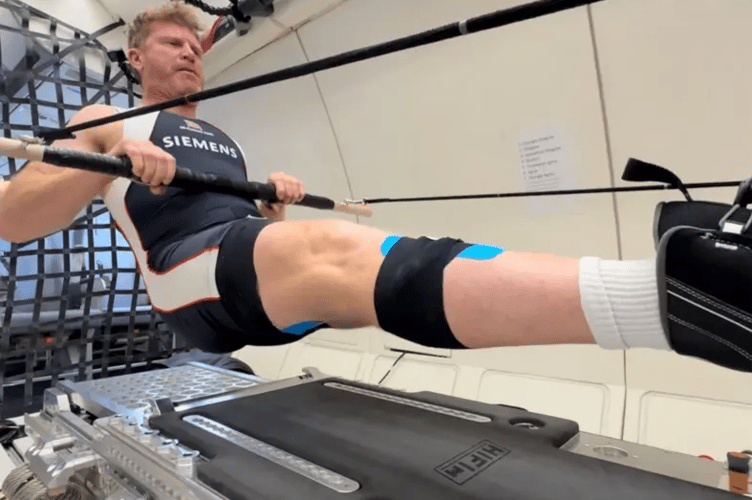
AN Olympic medal rower’s appearance at Monmouth Regatta proved simply stellar – as he chatted about his career and being involved in a Space race to develop a rowing machine that can be used in zero gravity.
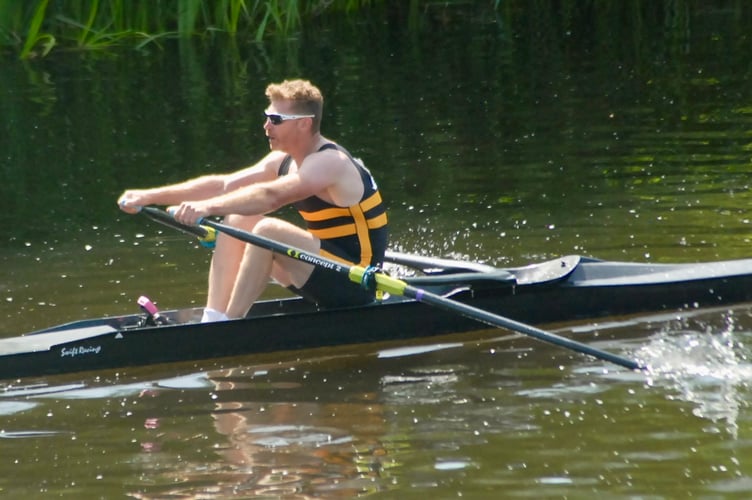
Matt Wells raced at four Olympics from Sydney through to London 2012 and won bronze in the GB double scull in Beijing with Steve Rowbotham.
And having played such a starring role on the water, the Avon County rower found it great to be back out on the river again at Monmouth Regatta.
Matt won the over-42 singles and his daughter the U15 girls’ singles, and he now intends to race a double scull at this month’s British Masters Championships with fellow ex-GB rower Marcus Bateman.
With that sort of calibre, they’ll be blasting off the blocks at Nottingham’s National Water Sports Centre.
But it was lift off of a different sort when he featured on national BBC News the day before the Wye event, having become involved in European Space Agency parabolic flights in France testing new gym equipment to help astronauts preserve bone density on long space missions.


Matt, who chatted to regatta commentator Scott Hazledine over the speaker, had just over 20 seconds to row in zero gravity when the plane went into a temporary free fall to create weightless conditions.
"Isn't it every kid's dream to be an astronaut?” he said. “It’s an opportunity to be able to do something really different. And working on something that might end up being used in Space is literally out of this world!”
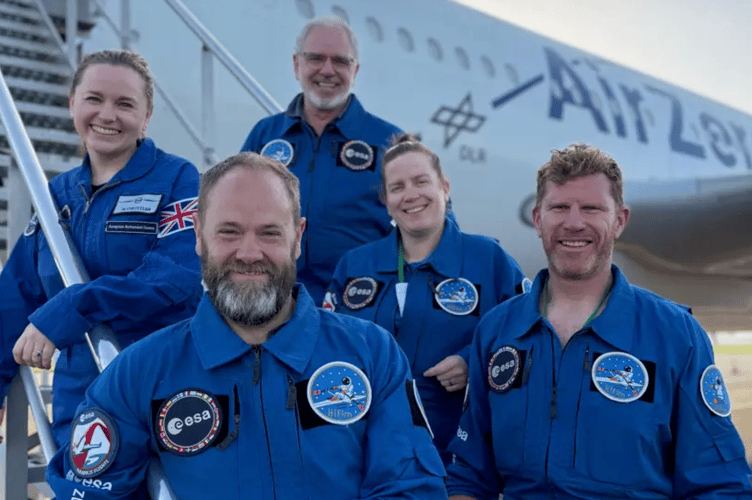
Rowing crams a lot of exercise into a short time – “more bangs for your buck” – and time-pressed astronauts use the rowing machine for training back on Earth.
“So talking to them, it made sense to try and design a rower that works in Space,” said Matt, who was lifted off his seat during the zero gravity test
“And it definitely works, a proper workout, with proper resistance. Now NASA are on board and it could feature on Artemis 4.
"Every year since the Olympics I've done some sort of physical challenge. I've been in boxing rings, an Ironman, swimming 6k, and playing rugby for a season," he added.
"This is another step again... off the chart... the most outrageous so far! And of course, I’d love to go into Space and try it out!”
Former aircraft engineer and pilates studio owner John Kennett, came up with the High-Frequency Impulse for Microgravity (HIFIm) device, which incorporates other exercises, after working with a client recovering from cancer who had low bone density.
And it was developed at Pinewood Studios by the 1917 Oscar-winning special effects team who have also worked on Star Wars, James Bond and Mission Impossible.
Matt, a state school head of PE in Cheddar, rowed hundreds of thousands of miles during his international career, and said the rowing machine is a great way of promoting the wider sport in schools and elsewhere.
Asked by Scott for his fave music for those 90-minute sessions, he name-checked Hurt by Jonny Cash – “because it does!”
“Monmouth Regatta is a great event, everyone’s friendly and it’s great to get back out on the river again.”
Comments
We've recently changed our login process. If you have an account for commenting, you will need to re-register on the login window.
This article has no comments yet. Be the first to leave a comment.