
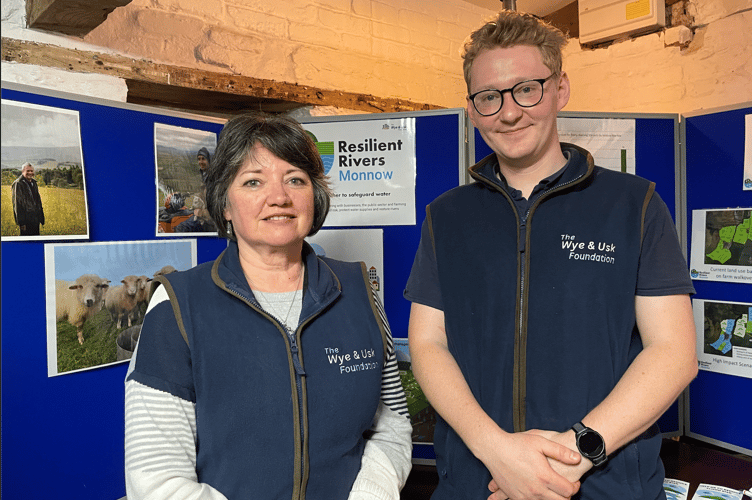
MONMOUTH residents attended a drop-in session to hear about a new nature-based initiative aimed at tackling flooding in the River Monnow catchment.
The drop in was held at The Robin Hood and took place from 2pm – 7pm on Wednesday April 15 bringing in residents across the town. Partners in the project include: Monmouthshire County Council, the Wye and Usk Foundation, Natural Resources Wales and Network Rail.
The initiative gave residents an insight into a new nature-based approach to prevent the risk of future flooding. Instead of relying on traditional flood defences, the project focuses on working with the landscape, particularly upstream farmland.
This includes measures like: improving soil health, changing land use, introducing natural flood management features like ponds.


Storm Claudia hit the town on November 15, leaving homes and businesses submerged in flood water and roads in catastrophic devastation.
The Beacon spoke to Monmouth residents at the drop- in who experienced the impact of flooding first-hand and what it was like for them.
Margaret North described the devastation of seeing her home and her friends' homes flood in the early hours of the morning. “People were running away from the water,” she said.
Her husband helped move cars, they alerted other residents in the neighbouring flats and waited to be rescued by emergency services.
“The shock is still there for my husband that it’s going to come the next night.
“If there’s teamwork with the authorities and volunteers in this project, then I think it’s going to make a big difference.”
Another Monmouth resident, Frances Ann Smedley spoke about how she felt when her home was impacted by the flooding last November.
“The feeling makes you feel numb and you cannot believe it’s happening, it's so surreal.”
Her neighbours and friends helped her during this difficult time, including offering her places to stay.
“People have been so kind and prayers have been answered but it’s very hard because it’s like a dream. My fear is someone saying its safe, the water won’t come over again, but when will anyone know that.”
Ross Price, Flood Risk Manager for Monmouthshire County Council, said: “It’s a long-term project but we are all hopeful that it will work.
“Natural flood management and nature-based solutions are becoming more widely recognised in terms of a way that we can manage flood risk.”
Wendy Ogden, Catchment Market Lead for the River Wye and Usk Foundation, said: “The flooding in most areas comes from the high point of the catchment, the flooding in Monmouth is generated by heavy rainfall on hills.
“Flooding in upper catchment generates flooding downstream. We’re looking at slowing and storing water in the upper catchment, rather than the water rushing down the hill in a big rush and hitting the river all in one lump, which forms a flood peak.”
Bill Pervis Operations Manager for Natural Resources Wales said: “We received a lot of important feedback, and it was really pleasing to see the interest the Resilient Rivers Monnow Project has stimulated.”
Comments
We've recently changed our login process. If you have an account for commenting, you will need to re-register on the login window.
This article has no comments yet. Be the first to leave a comment.