
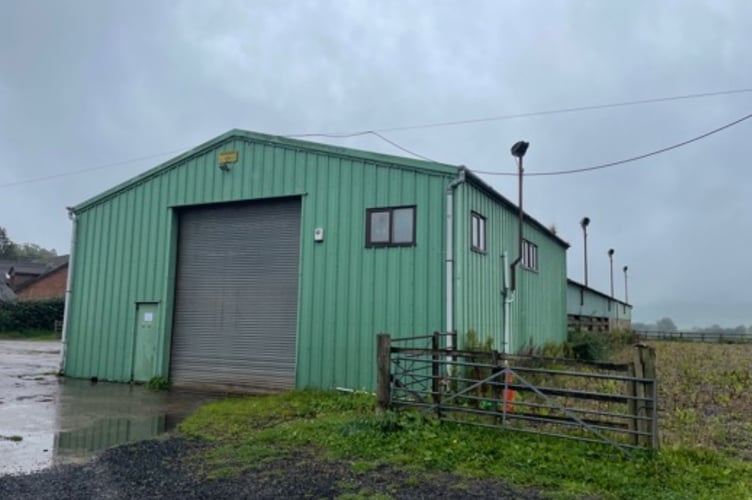
A FORMER riding schools and stables in a countryside conservation area near Usk can be used for a range of different business types.
Brexit and knock-on changes to Welsh farming subsidies have been highlighted as reasons behind the farmers seeking new uses beyond traditional farm diversification schemes such as bed and breakfast accommodation and farm shops.
A fencing and farm supplies business, run by one of the applicants, will relocate from Newport as a result of the change of use application having been approved.
Little Ton Lands, on the edge of Tredunnock and within the village conservation area, already houses a service centre for the Usk and Wye Valley ATV dealership within the farm yard, after planning permission was granted in 2024.



The new planning permission allows a shed, previously used as livery or stables, to be divided into four units, with one used for the Monmouthshire Fencing Supplies business, and the other units will have permission for office and light industry use, industry and storage and distribution.
The site was previously the base for Usk Valley Livery which operated from 2005 to 2022.
The adjacent former manège, or enclosed riding area, will be used for staff and customer parking as well as for storing fencing. The equestrian surface has already been removed for reuse elsewhere, leaving a permeable stone subsurface for the yard surface.
The area is currently enclosed by six foot high wooden stakes with galvanised wire mesh, known as deer fencing, and it is planned to add a native hedge to screen the fence from the roadside. Existing gates will be replaced to provide enhanced security to the yard and units.
A statement submitted with the application explained applicants, Messrs Underwood of Little Ton Lands, are seeking to secure the future of their farm through new uses.
It stated: “This proposal needs to be seen against the backdrop of the ending of UK membership of the EU and the paradigm shift in funding farmers beyond food production to environmental managers of a sustainable countryside delivering ‘public goods’ for the benefit of wider society.
“The harsh realities of modern-day farming means many Welsh farmers are having to find supplementary income sources outside the sphere of the traditional working farm. Farming resilience will be a reflection of how farmers can make changes to their operations and introducing income streams external to the core farm business.”
It added: “Farm diversification will continue to be a feature of the Welsh farm and quite probably a mainstay with the move away from basic payments on the horizon. Climate change means the face of farming is destined for radical change with reforms placing environmental outcomes at the heart of future support aimed at reversing biodiversity decline, meeting carbon budgets and hitting clean air targets.
“In the past, farmhouse B&B and farm shops were a typical form of farm diversification to complement farming activities but the increasing volatility in the industry as well as extreme weather events and climate change means a greater reliance on more commercially orientated activities if farms are to stay productive, progressive and profitable. Optimising redundant buildings for conversion offers the opportunity for farmers to use existing assets for commercial rental and so generate a new source of income alongside traditional farming activities.”
Monmouthshire council planning officer Kate Bingham said the council has a seven point policy on re-using and converting existing buildings in the open countryside and a policy on farm diversification and the new uses are acceptable.
Comments
We've recently changed our login process. If you have an account for commenting, you will need to re-register on the login window.
This article has no comments yet. Be the first to leave a comment.