

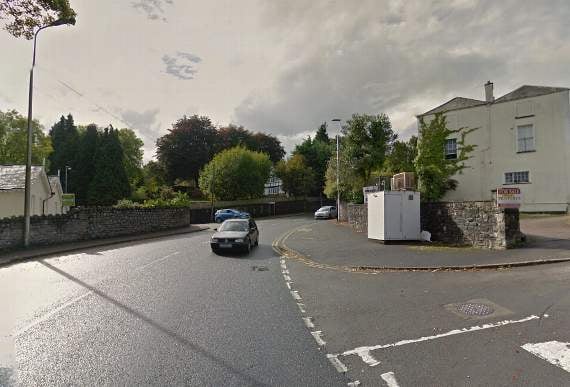
IN a national report on air pollutants, Chepstow is close to the top of the table for having the most dangerous air to breathe, coming just behind London and Glasgow.
The World Health Organisation (WHO) database on air quality shows 44 out of 51 British towns and cities had failed its tests for particulate matter smaller than 2.5 microns across.
Chepstow has a rating of 14 micrograms per cubic metre of air, while London has 15 and Glasgow, the worst offender, has 16.
The particles, known as PM2.5s, have been linked to causing heart disease and premature death and should not exceed 10 micrograms per cubic metre of air, according to the organisation.


Particulate matter is a term used to describe the mixture of solid particles and liquid droplets in the air. It can be either human-made or naturally occurring. Some examples include dust, ash, black carbon or soot.
Since the particles are so small and light, fine particles tend to stay longer in the air than heavier particles.
People with heart or lung diseases are more vulnerable to particle pollution because of their conditions, such as congestive heart disease, coronary artery disease, asthma, or chronic obstructive pulmonary disease.
Chepstow has been the focal point for concerns over high levels of pollutions in the past.
In 2006, Monmouthshire County Council (MCC) declared Hardwick Hill an Air Quality Management Area (AQMA) due to high levels of pollutants and despite regularly monitoring levels and creating a 29-point action plan in 2011, the area is still of high concern.
Usk has also been an AQMA since 2005 with regular tests confirming that pollutants along the road remain above the UK and EU recommended levels.
A 2015 Updating and Screening Assessment for MCC identified that 54 per cent of HGVs on the A48 in Chepstow are through trips and could be avoided.
The Toll at the Severn Bridge has been identified as a contributing factor to air quality exceedances on the A48, Hardwick Hill, as a number of HGV’s use the route to avoid paying the toll into Wales.
Dr Toby Hillman, one of the report’s authors from the Royal College of Physicians, said: “There isn’t a safe limit for the amount of pollution that’s been defined as yet and we know the effects of poor air quality run from cradle to grave; it’s a lifetime threat to human health.
“This is a really direct and tangible impact on UK health from the drivers of climate change, and taking action on air quality should be a priority.”
Comments
This article has no comments yet. Be the first to leave a comment.