

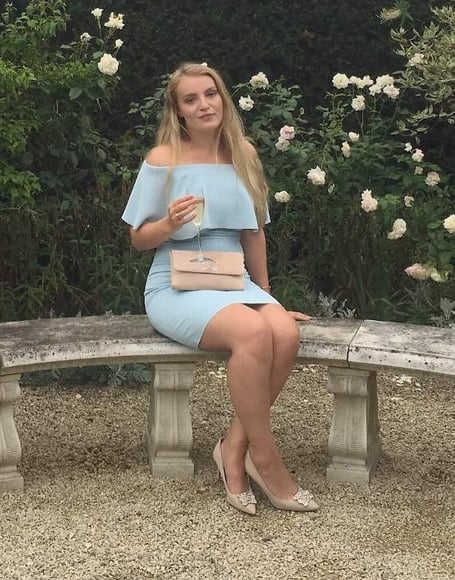
A CHEPSTOW woman is hoping to overturn misconceptions about dyslexia, ahead of Dyslexia Awareness Week which commences nationally on 1st October.
Evie Bruton, a Chepstow resident and current university student, has experience first-hand how institutions can perpetuate the great misconception that dyslexia and lack of academic intelligence are linked, by providing outdated and alienating solutions for students with the condition.
Evie, who is an aspiring history teacher, talks about how she hopes to proudly wear her learning difficulty, by labelling it her unique selling point as a teacher. Because having walked in the shoes of students struggling through school with dyslexia, she wants to be their point of contact, and hopes to provide them with the kind of fully realised help and assistance that she knows will serve to bring out their potential, rather than alienate them due to out-dated misconceptions about dyslexia in school.
“My diagnosis was in primary school, on one hand, I feel lucky that I was diagnosed earlier, but also feel that the label was limiting and the misconceptions about the condition pigeon-holed me at such an informative point in my social and educational development,” she says.


“Institutions seem to perpetuate the great misconception, that dyslexia and lack of academic intelligence are linked, by providing outdated and alienating solutions for students with the condition. Everyone is different, and dyslexia comes in lots of forms, sometimes I think that institutions overlook that when providing blanketed methods of aid.
“I think that a change in attitude towards dyslexia is needed; one that catches it early in order to put a solid support system in place, and subsequently embraces new technological advances, like the Dragon speech recognition software I use at University, that helps me to easily get thoughts onto paper when it comes to writing essays. This kind of technology provided to me by the DSA has really helped me to feel at less of a disadvantage to my peers.
“I have an overall positive outlook on what dyslexia brings me, I hope to have an impact on kids like me one day. My goal is to be a history teacher and wear my learning difficulty openly, by labelling it as my unique selling point as a teacher. Because having walked in the shoes of students struggling through school with dyslexia, I want to be their point of contact, to help them using the kind of assistance that I needed at school to bring out their potential, rather than alienate them due to out-dated misconceptions.”
Comments
This article has no comments yet. Be the first to leave a comment.