
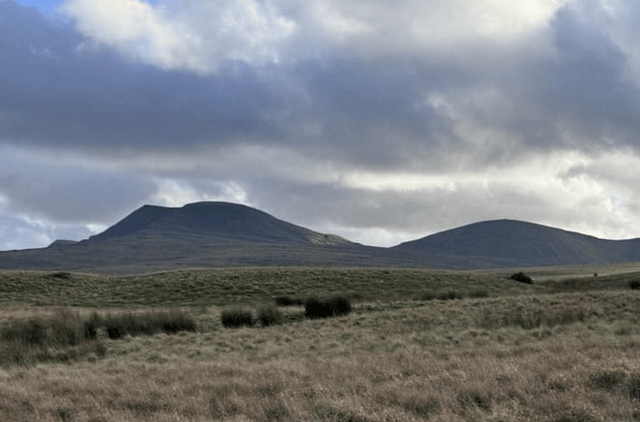
THE Black Mountains Land Use Partnership has been awarded almost £1m to restore one of Wales's key upland landscapes
It will help support farmers, restore priority habitats, and build long-term ecological resilience across the mountain range.
The BMLUP has been awarded the grant of £995,152 from the Nature Networks Fund, to support a three-year programme of landscape-scale habitat restoration and community-led conservation.
The fund is being delivered by the Heritage Fund, on behalf of the Welsh Government, and is a programme that aims to strengthen the resilience of Wales' protected sites and accelerate nature’s recovery.

The funded project will bring together farmers, landowners, statutory agencies, and local communities to restore the ecological health of the Black Mountains Site of Special Scientific Interest (SSSI) and the surrounding landscape of over 24,000 hectares.
The SSSI supports nationally important upland habitats including blanket bog, upland heath, and acid grassland, alongside priority bird species such as Ring Ouzel, Golden Plover, and Red Grouse, and several species of endemic Whitebeam found nowhere else on Earth.
Decades of drainage, bracken encroachment, and shifting grazing patterns have placed these habitats under increasing pressure.
This grant will build on the success of the partnership’s previous Sustainable Management Scheme (SMS) project, which delivered 47.1% of its peatland restoration target and managed over 300 hectares of bracken annually.
BMLUP chairman Phil Stocker said:"Over the next three years, we intend to make a genuine, lasting difference to both the ecology and the economics of this place.”
Over the next three years, the funding will deliver on three main areas of work:
Conservation targeted Grazing Fund: Direct funding will be available for farmers who want to introduce grazing cattle onto priority areas on the commons.
Cattle graze in a varied, unselective way that breaks up dense vegetation, creates bare ground, and opens up space for a wider range of plants and insects, as well as reducing the risk of wildfires.
Support will be available for livestock, fencing infrastructure, and management time, with payments based on the environmental improvements achieved.
Peatland restoration: Practical work to stop degraded peatland getting worse and help it recover will include blocking drainage channels to raise water levels, stabilising bare peat, and reintroducing Sphagnum moss.
Healthy, wet peat locks up vast amounts of carbon that would otherwise be released into the atmosphere.
It also acts as a natural sponge, slowing water flow, improving river quality, and reducing flood risk in valley communities downstream.
Bracken management: Sustained, strategically sited, and evidence-led control of bracken encroachment will take place across the commons.
Left unchecked, bracken shades out heather, grasses, and wildflowers, strips the hillside of the varied habitat that ground-nesting birds, invertebrates, and small mammals need to survive.
Bringing it back under control allows those habitats to recover, aids livestock management, and reduces tick burdens in the process.
This work will be supported by a facilitated process to bring together farming families, landowners, and local communities to agree a shared vision for the landscape's future.
Comments
We've recently changed our login process. If you have an account for commenting, you will need to re-register on the login window.
This article has no comments yet. Be the first to leave a comment.