
THIS year sees the 800th anniversary of the creation of one of the world's most famous and important documents – the Magna Carta.
On 19th June 1215 the Magna Carta, or Great Charter, was sealed by King John and his Barons at Runnymede, Berkshire.
One of the chief negotiators in bringing the many different parties together was William Marshall, the Earl of Pembroke and "the greatest knight who ever lived" according to the 13th century Archbishop Stephen Langton.
Marshall also later became Regent of England when King John died, and he carried great power in south Wales especially, controlling lands from Chepstow through to Pembroke.


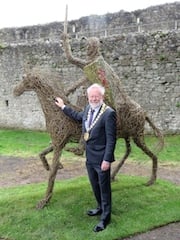
Chepstow Castle was greatly modernised thanks to his money and military experience, and Cadw has marked his influence both on the fortress and the Magna Carta by commissioning a sculpture of William Marshall to stand in the grounds.
Unveiled on Sunday 29th March, the statue, created by Caroline Gregson and Michelle Cain from Willow, also marks the start of a series of 800th anniversary events in the region, with Chepstow Castle sitting at one end of a country-wide Magna Carta trail that also takes in Tintern Abbey and Usk Castle.
The Magna Carta was one of several charters issued, which aimed to settle increasing unrest between the monarch and the country's nobles. It set into law basic liberties that applied to everyone and showed that even the king was not above the Common Law of the land, becoming one of the cornerstones of democracy around the world.
For more information on Cadw events in the county, visit http://www.cadw.wales.gov.uk">www.cadw.wales.gov.uk and to find out more on the history of the Magna Carta, and William Marshall's influence on it, visit http://www.magnacarta800th.com">www.magnacarta800th.com
Comments
This article has no comments yet. Be the first to leave a comment.