

’What have the Romans ever done for us?’ asked one of the disgruntled citizens in Monty Python’s Life of Brian.



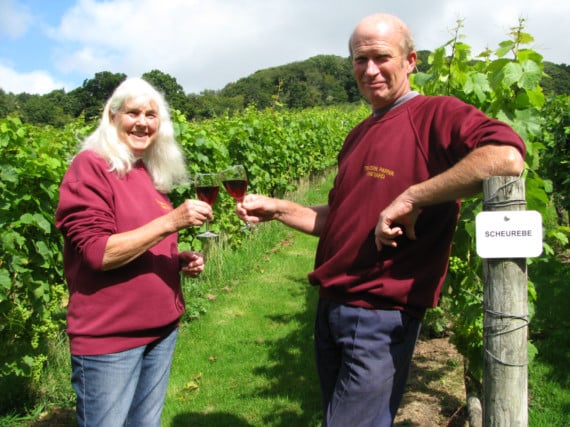
Well, apart from the aqueducts, roads, sanitation, baths, irrigation, education etc the long list of grudging responses included the introduction of wine.It’s quite possible a Roman settlement cultivated grapes on the steep, south-facing slope above Tintern where Parva Vineyard sits today and where you can make out the Latin word ’Parva’ (little) inscribed on an ancient well.It’s even more likely to have been the site of a vineyard tended by the Cistercian monks of Tintern Abbey centuries later.Colin and Judith Dudley bought 60-acre Parva Farm in 1996 and worked hard to restore the neglected two and a half acre vineyard planted by the previous owners 40 years ago."We took out two varieties, the earliest and latest croppers, and added a red called Regent, which ripens earlier than Pinot Noir, has a thicker skin and produces pink juice," explained Colin.Learning how to look after the vines wasn’t hard, according to Judith. "Colin’s a farmer and I’m a former florist and they’re just plants after all! But we had to learn about wine-making by trial and error and from books and with help from the experts at Three Choirs Vineyard, Newent where our wine is made."Parva wines have since featured on several TV programmes including The Hairy Bikers, Countryfile and Saturday Kitchen and when the UK held the EU presidency in 2005 their medium dry white was served at one of the state dinners."It’s hard work - and we have other things to do like lambing - but we just about manage on our own, with local people coming in to help with the harvest."The site has around 4,000 vines of 16 different varieties producing approximately 11,000 kilos of grapes that, in an average season, make 4,500 -5,500 bottles."Cold weather in winter isn’t a problem, the crucial thing is to have dry, warm weather during the flowering season because the vines are wind-pollinated and rain washes the pollen away," said Judith."In 2002 there was an unexpected sharp frost in October which made the vine leaves curl up, so we harvested the grapes quickly and used them to make our first rosé. Two years on it was voted the best in the UK - in the Best of English and Welsh Wine of the Year competition."Producing the first good crop takes about five years. Our first award came in 2002 for our 2001 Bacchus mix, but the one that gave us the biggest boost was our white sparkling wine being voted Best Welsh Wine in the 2016 English and Welsh Wine of the Year competition run by UK Vineyards Association (now Wine GB)."We currently produce five still wines, two sparkling, four sweet fruit wines and a spicy mead."Visitors from all over the world call in at Parva Farm and are often surprised to find red wine being produced in the UK."The weather was perfectly suitable for wine production in Britain from Roman to Medieval times," said Judith. "There were 42 vineyards recorded in the Domesday Book and many more flourished in the centuries that followed."But a combination of factors saw them decline. Wine production is very labour intensive and the Black Death killed many agricultural workers; the weather cooled down and, of course, Henry VIII dissolved the monasteries. It wasn’t until the 1950s that there was a wine-making revival."For now until Sunday (1st September) there’s an exhibition of the 40-year history of Parva Vineyard , with free vineyard tours and wine tastings. Opening hours 1pm to 5.30pm.
Comments
This article has no comments yet. Be the first to leave a comment.