

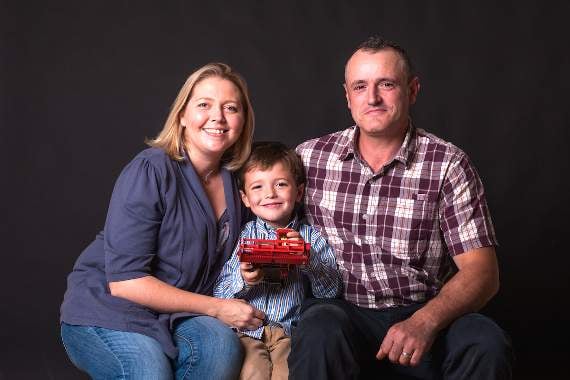
A MONMOUTH kidney transplant recipient is encouraging people to consider becoming living organ donors alongside the Health Secretary, Vaughan Gething.
In Wales, 31 people became living donors in 2017-18 and around 1,100 living kidney transplants take place in the UK each year.
Kathryn Lewis (37) is a farmer’s wife from Monmouth. She was born with a serious liver disease which, by the age of 33, left her in dire need of a life-saving liver transplant.
Kathryn explains: “I was born with a debilitating liver disease. A childhood operation and ongoing treatment for my condition allowed me to live a relatively normal and active life for the first 33 years. I’d gone travelling, got married and given birth to my son, who’s now five-years-old. However, it was following the birth of my son five years ago that I first started to feel very unwell again. A trip to see my GP confirmed the seriousness of my condition and I spent the New Year of 2013 in hospital. I was informed that my liver function was so poor that a life-saving liver transplant was the only option for me.


“Thanks to the liver donor and my transplant operation, I now feel better than ever. I am able to enjoy a normal and active life with my family once more.”
Kidneys are the most common organ donated by living people; however there are approximately 5,000 people waiting for a new kidney on the transplant list in the UK.
A successful transplant from a living donor (rather than one from someone who has died) is the best treatment for most people with kidney failure. This offers the recipient the best opportunity of success as 82 per cent of kidneys donated by a living donor will still be working after 10 years. This compares with 75 per cent for kidneys transplanted from deceased donors.
Other advantages include reduced waiting time and the possibility of avoiding dialysis altogether, increasing the recipients life-span following a transplant.
Other organs that can be donated by a living person include part of a liver, a segment of a lung and part of the small bowel.
The Health Secretary, Vaughan Gething said: “Living donation plays a vital role in saving and transforming lives, offering more patients with kidney failure, and other diseases the possibility of a successful transplant.
“Often, living donors are close relatives or friends but you can still donate an organ to someone you do not know.
“I’m proud that we are leading the way on organ donation in Wales, but while there are people dying waiting for a transplant, we must work harder to further increase awareness of the possibility of living donation.
Mike Stephens, a Consultant Transplant and Organ Retrieval Surgeon at University Hospital of Wales in Cardiff has first hand experience of how organ donation transforms lives. He said: “Donating a kidney is a very personal decision and is not something everyone feels comfortable with. Only you can decide if it’s something you would like to volunteer to do.
“Healthy people who wish to help a loved one or a stranger with kidney disease may volunteer to give a kidney.
“Generally people who receive a kidney from a living donor live for longer than those who receive one from a deceased donor and much longer than they would be expected to live if they did not receive a kidney transplant.
“Living kidney donation allows the operation to be planned at a time that is convenient for the recipient, donor and clinical team.”
Ann Marsden, who works as a Living Donor Transplant Co-ordinator at the University Hospital of Wales, has helped to facilitate over 500 life-saving kidney transplants involving living donors over the past 16 years. She said: “I’ve seen how this selfless act of giving can transform the life of someone suffering with kidney disease.
“Living kidney donation can often be the best long-term form of treatment for a patient with kidney disease, especially if the transplant can be performed before the need for kidney dialysis.
“The operation success rate is excellent and patients receiving a kidney from a living donor can expect to benefit from a fully functioning kidney for 15 to 20 years on average.”
Comments
This article has no comments yet. Be the first to leave a comment.