

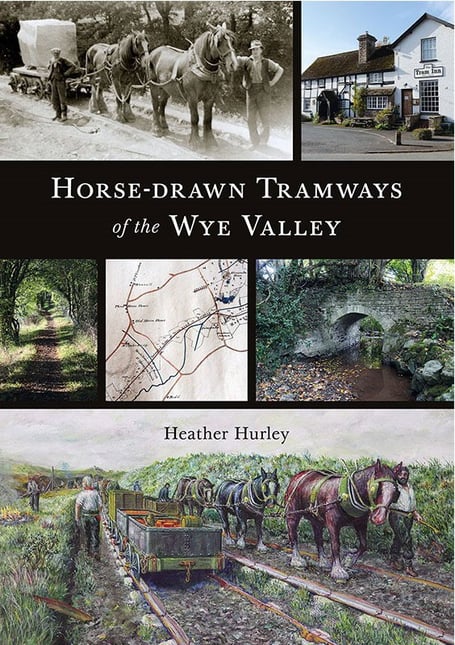
The local history dynamo that is Heather Hurley will be addressing Monmouth History and Field Society on Friday (March 20), on the horse-drawn tramways of the Wye Valley. She has more than 20 books to her credit about the history of our patch – on subjects such as green lanes, the river trade, and how the old tracks became turnpikes fit for coaches – and has given well-received talks to the society over the years.
Heather Hurley's books have shone a bright light on the local area's history and include The Pubs of Monmouth, Chepstow and the Wye Valley; The Scudamores of Kentchurch and Holme Lacey; and Herefordshire's River Trade: Craft and Cargo on the Wye and Lugg.
She has also written several walking books with late husband John, such as Wye Valley Walk; Rambles and Refreshment on the Welsh Border; and Paths and Pubs of the Wye Valley.
The history of rail transport carries both pride and regret for Monmouth, because on the one hand we were trailblazers in tramroads, linking the coal and iron industries of the Forest of Dean with the River Wye, and on the other we were furious to be bypassed by the steam locomotive network that was transforming early Victorian Britain (and ended up after the Beeching cuts with nothing).


Monmouth’s oldest relic of the Industrial Revolution is the stone shed that still stands beside the bottom of Wyesham hill, at Mayhill, where the tram-road terminated.
Mrs Hurley’s illustrated talk at the Priory on Friday will start at 7pm. Visitors are welcome (guest donation £5). It is the last of the winter season of lectures.
The society’s next event will be a pub lunch for members on Thursday April 23, followed by visits to St Mary and St Michael’s Church, Llanarth Court, and St Bridget’s Church, Llansantffraed.
Comments
This article has no comments yet. Be the first to leave a comment.