
Spring is a season of great hope and joy.
The winter landscape, with its palette of greys and blues, is replaced by a riot of colour. In January, the season is heralded by timid snowdrops peeping up through cold clods of earth. They are followed by more gaudy neighbours as daffodils in hues of orange and yellow trumpet the arrival of spring and crocuses in deep purples and orange vie for attention demanding to be seen.
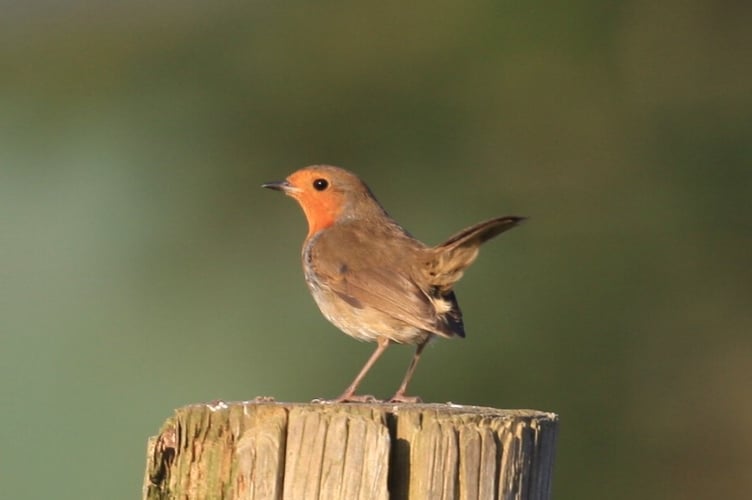
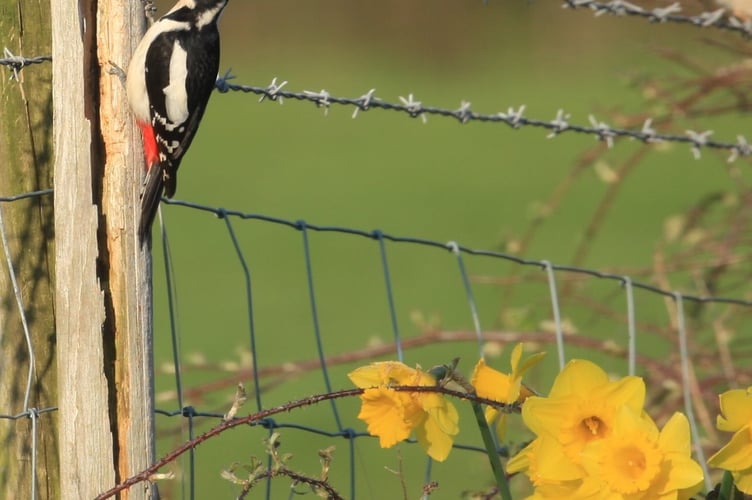
The changes in the visual landscape are accompanied by dramatic differences in the soundscape. The fluting song of the robin, heard throughout the winter, no longer dominates. Instead, its mellifluous tones are interrupted by the raucous yaffle of green woodpeckers enthusiastically dipping from tree to tree. Their cries are set to the drumbeat of their great spotted cousins who rap relentlessly on the branches of mature trees or on the local telegraph poles (which consequently have to be replaced on a regular basis!). The blackbirds start to sing, and the see-saw song of the great tit floods the fields.


This year spring arrived a touch early. Stormy weather was accompanied by warmer than average dry spells and around us the daffodils shot up and flowered well in advance of St David’s Day.
The birds took their cue and there were signs of pair bonds being rapidly formed and cemented, with robins feeding their mates, red kites in couples overhead and excitable woodpeckers seeming to occupy every tree.
Having seen a pair of red kites regularly soaring above us I was disturbed when after storm Eunice one of them appeared impeded by plastic detritus dangling off its foot. Concerned for its welfare, I have kept a keen lookout for it ever since but have not had any sight of a kite alone or as part of a duo.
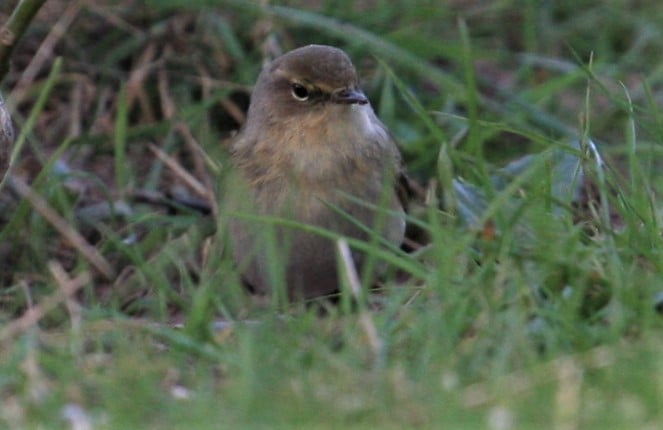
In mid-March, a new sound joined the growing cacophony in the hedgerows. The unmistakable voice of a chiffchaff announced their return from north Africa.
These tiny birds have such distinctive calls that they are unmissable from a sound perspective, whilst simultaneously remaining all but invisible in the dense undergrowth and hedges. I was incredibly pleased, therefore, to chance upon one feeding when ‘armed’ with my camera and have included one of the shots here. I have not been so fortunate with the elusive redstart, however! These, too, have arrived from Africa and are making their presence known with their loud whistling calls. All last summer they teased me with fleeting appearances and a steady stream of vocalisations, but they never once sat still for long enough for me to take a closer look. It was a matter of no small regret, because they are stunning birds and display unusual tail shivering behaviour that is worth watching out for in its own right.
Spring birdsong is uplifting and the early clouds of blossom which shroud the blackthorn and clad the damson trees undoubtedly stir music in the soul, but it isn’t only the plants which appear to their best advantage in the strengthening sunshine. This is the time of year when the plumage of many birds is at its best. They emerge from the winter in new finery designed to encourage the attentions of potential mates.
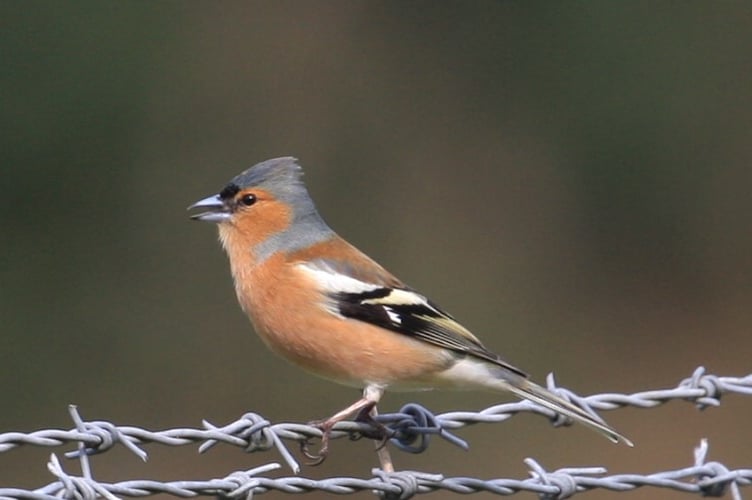
Great tits seem to shine in gold and black, male siskins are resplendent in green and yellow robes with black caps, and chaffinches must surely be crowned champions of all, as they buff up magnificently in shades of pink, cream, yellow, and grey blue.
They form an unmistakeable part of the crowd that throng around my bird table and it is heartening to see the males joined by less showy females, promising a future with more chaffinches to come.
While the days are filled with a whirr of feathers, the piercing, keening, call of buzzards overhead, and a strengthening buzz in the herbaceous borders, our spring nights are also alive with activity.
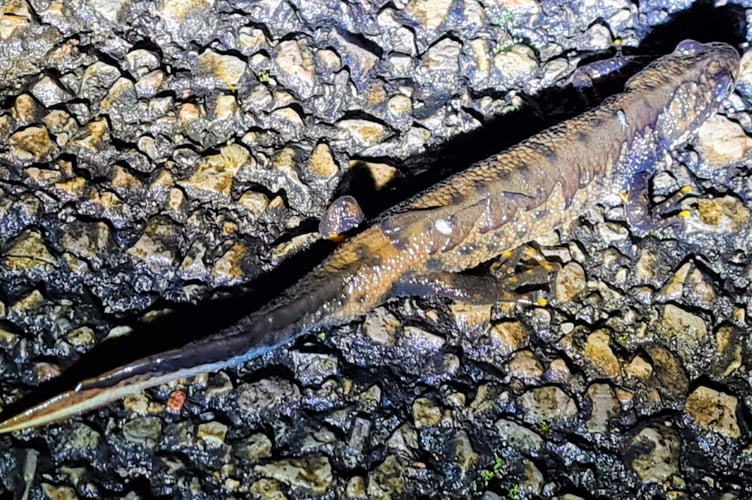
In March I stepped out into the darkness only for the beam of my torch to reveal a party going on right on my doorstep. As an uninvited guest I trod carefully through the throng of toads counting ten before giving up and simply watching in awe. They froze in the dazzling beam revealing their identity in their crawling posture. They were intent on heading for the pond where they themselves had hatched and they would have been hoping to find a mate before the night was out. More recently a different night-time find had me equally spellbound and delighted. It was also of an amphibian nature, but it involved a much rarer sight than the common toad. On dry land and up close its size was impressive and its jagged crest distinctive despite being plastered to its damp back much like the wet hair of a human swimmer. Its feet revealed some of the colour that was also to be found on its underside – a sulphurous orange-yellow contrasting strongly with its dark spots. What I had surprised, in the midst of its nocturnal meanderings, was a great crested newt.
This discovery was of a different order to those of the smooth and palmate newts that I have regularly watched, gracefully swimming in our garden pond, munching on frogspawn and sheltering in my toad houses. A great crested newt is something rather special and highly protected by law. It is well-named, being both remarkably large compared to other UK species of newt and endowed with a jagged crest running down its back and another along the top of its tail. ‘My’ newt gazed at me, apparently unimpressed with my company and he slowly began to move away. I photographed him with my phone before leaving him to his own devices. Where there is one great crested newt there is surely another and the thought of them so close by, perhaps reproducing in my own garden pond, seems quite fantastic.
The surprises and promises of spring will continue on through the summer. The narratives of the wildlife around us will emerge and will, in turn, tell a new story about the state of our environment and the habitat that we are shaping around us. As ever, I am hoping for tales with happy endings, of swallows returning to our barns, of swifts residing in newly sited boxes or specially adapted house bricks, and of newts, frogs and toads multiplying in our clean and uncontaminated ponds.
Watch out for the summer update to see how things turn out in this small patch of Monmouthshire!
*All photographs by the author
Comments
This article has no comments yet. Be the first to leave a comment.